

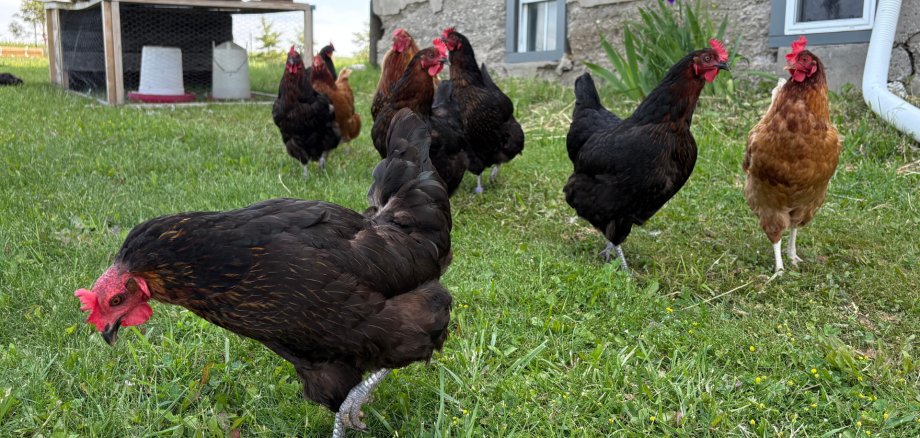
On Sunday, March 1, 2026, the district of Kleve will lift the general, district-wide obligation to keep poultry indoors. The corresponding general ruling was issued by the district of Kleve today, February 27. This can be viewed on the Kleve district website
www.kreis-kleve.de/bekanntmachungen (General ruling - avian influenza - 2026-014). The district-wide confinement obligation resulted from the immense outbreak of avian influenza in the winter of 2025/26. Since the end of October, the district has been affected by an unusually high number of outbreaks. Veterinarians recorded a total of 18 outbreaks with around 340,000 affected animals. "Such an outbreak is extraordinary and, above all, a hard blow for the affected farms. In addition, the flood of cases has also pushed our colleagues in the Kleve district to their limits and beyond", says Diana Nienhaus, Chief District Veterinary Director of the Kleve district.
There are several reasons why the district of Kleve - like the neighboring district of Wesel - is able to lift the district-wide compulsory stall. In addition to the declining incidence of infection, these include the seasonal migratory movements in the wild bird population. For the district of Kleve, the decisive factor is that the countless winter visitors are returning to their breeding grounds.
Owners should remain vigilant
The avian influenza situation has eased in recent weeks: Among other things, there has been a decline in the number of wild birds tested positive and, due to the change in the weather, the winter visitors are expected to fly on. As a result, the lifting of the district-wide compulsory stall is justifiable from an epidemiological point of view. However, the risk of possible infection of poultry with the avian influenza virus has not been averted: Caution is still required! In view of the extent of the outbreak this winter, it can be assumed that the viral load in the wild bird population and in the surrounding area has risen massively in recent years. The aim of all animal disease control measures must be to prevent the virus from entering other domestic poultry flocks and thus also to minimize the backflow of the virus into the environment and wild bird population. "The current situation allows us to lift the compulsory stall requirement. Nevertheless, I ask all poultry farmers to remain vigilant and to continue to strictly adhere to the biosecurity measures in order to prevent new outbreaks," explains Diana Nienhaus.
The biosecurity measures serve to protect domestic and wild bird populations and to contain any possible spread to mammals. Every poultry farmer can and must contribute to this important task. Animal disease legislation stipulates statutory reporting obligations and the personal responsibility of keepers to comply with all necessary biosecurity rules and
precautions.
The following key points should be mentioned as examples:
- Reduce contact with wild birds: Where possible, design runs so that wild birds have no access to your own poultry.
- Feeding and drinking troughs: Do not scatter feed outside; clean feed bowls and drinking troughs daily and place them inside the barn.
- Watch out for early warning signs: rapid, unexplained deaths, reduced feeding behavior, reduced laying performance, breathing difficulties, runny eyes/noses, diarrhea, neurological deficits (coordination disorders, head tilting).
- Observe reporting obligation: Report suspected cases immediately to the responsible district veterinary office.
Source: District of Kleve